
Uvalde VINE Is Now IVSS
Texas county victim notification changed on September 1, 2025. County VINE ended and the current brand became Texas IVSS-Counties. Existing registrations migrated. A first login may require a password update, and calls or texts now come from the new provider. Instructions that still describe the old county VINE telephone PIN process are historical, not the current registration method.
The Texas Attorney General transition notice identifies the new platform and a 24-hour support number, 866-268-8959. Uvalde participation was not confirmed in an indexed official county list. Check the live portal or call support before assuming a Uvalde County Correctional Facility record will appear.
The state transition page documents the change displayed below.
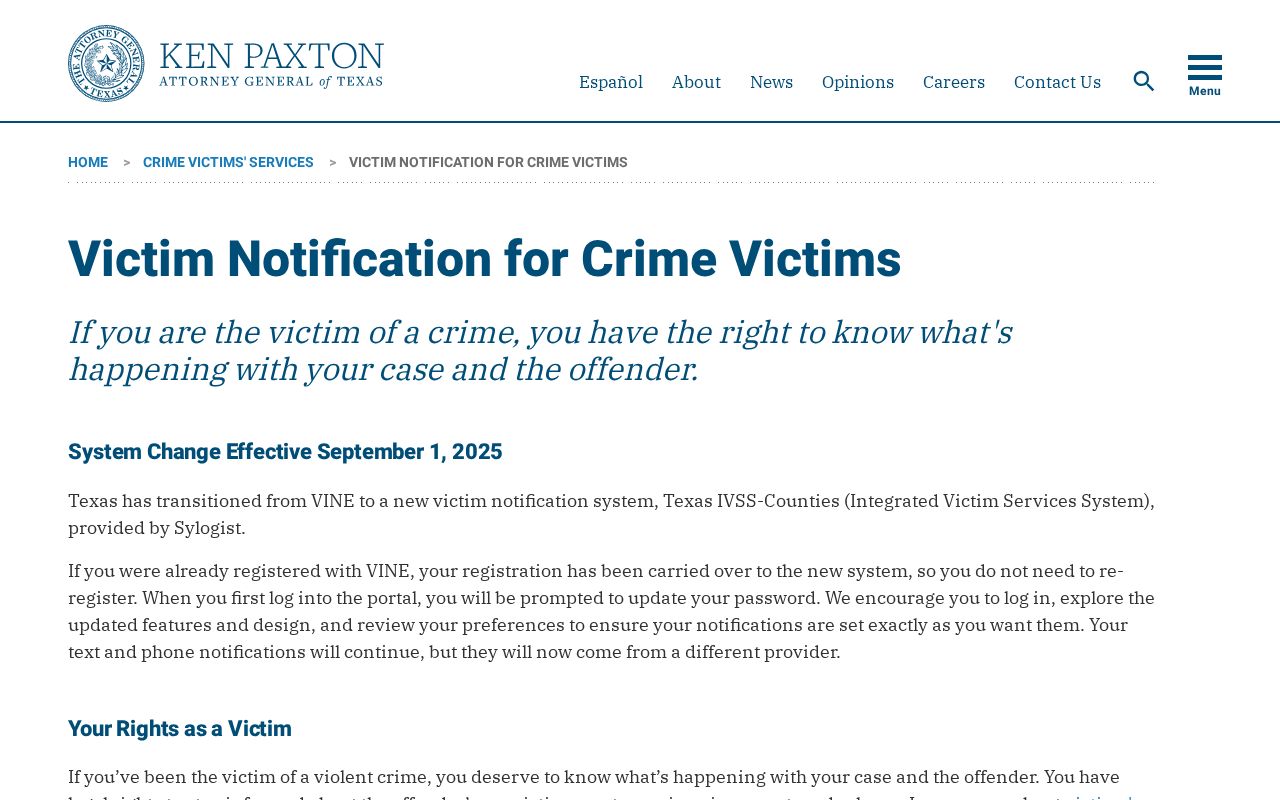
The notice explains why older VINE directions and the former PIN step should not control a current search.
Search Uvalde IVSS-Counties
Open Texas IVSS-Counties. Search by a full or partial name, or use a DOC ID, SID, jail ID, or permanent booking number. An identifier is safer than a name alone. Compare every returned identifier before selecting a record, especially when names or birth details are similar.
The portal covers people currently in participating custody or under supervision. A matching result can establish the status shown by that system at that time and reveal available notification events. It does not authenticate the underlying court disposition or guarantee that all Uvalde custody data is present.
- Collect the legal name, aliases, date of birth, and any booking, SID, jail, or DOC identifier.
- Search the county IVSS portal and compare the returned details before selecting anyone.
- Read the custodian and status label. Do not assume that every jail, prison, parole, or federal event shares one record.
- Save the search time and exact status if it matters to a release check.
- Confirm the event with the Uvalde sheriff, court, TDCJ, or other named custodian.
The live service uses CAPTCHA and changing controls. An authorized search can document the form or a legitimate record, but no result should ever be invented to illustrate the process.
The official county portal shows the current person-search entry point.
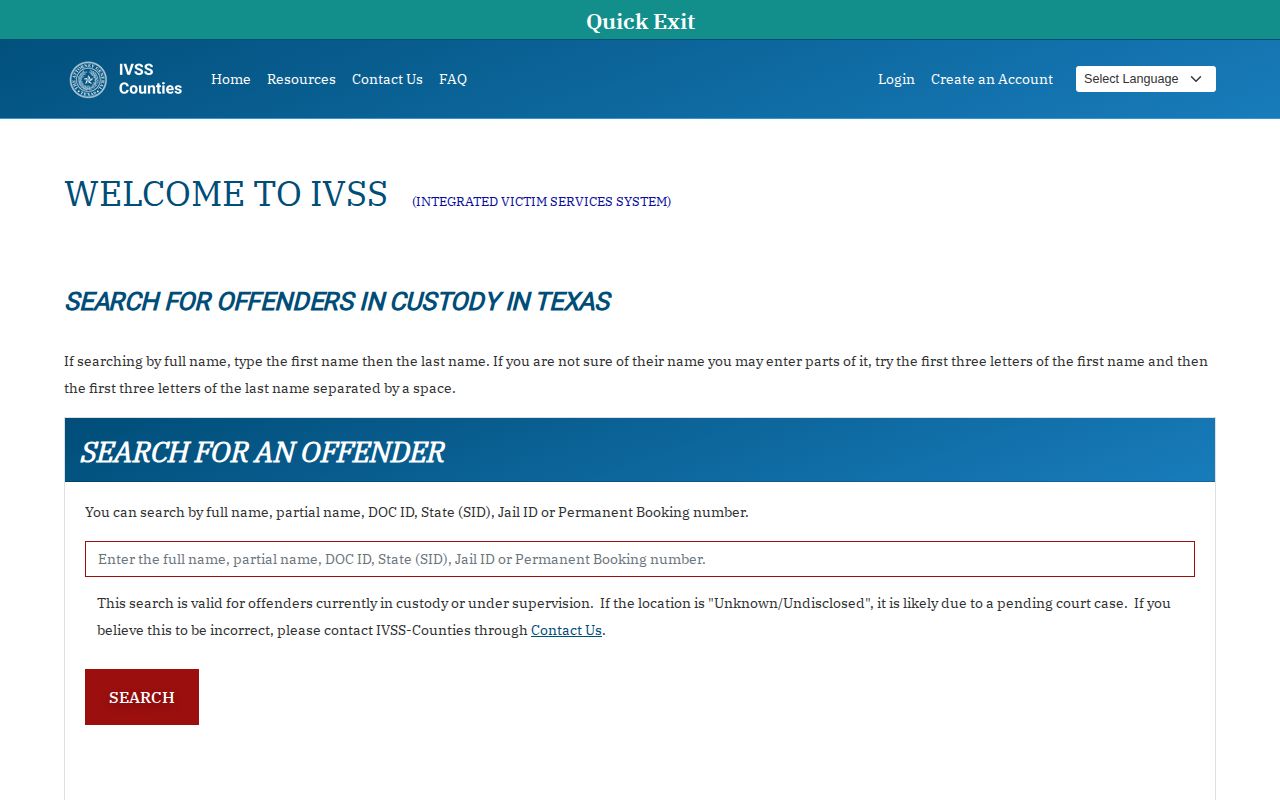
The search screen reinforces the need to use exact identifiers and verify that the correct participating custodian supplied the record.
Register Uvalde Release Alerts
Current registration is account based. Find and select the correct person first. Choose any available phone, text, or email notifications, then provide and verify each contact route. Set preferred hours or blackout dates if the portal offers them. Save the registration, respond to any verification message, and keep the account details current.
Legacy Texas VINE used phone or email enrollment and a four-digit PIN for telephone confirmation. Do not create or enter an old VINE PIN as a current step unless the live system itself specifically requests one. Migrated users may instead need to update a password after the 2025 transition.
- Use more than one available contact route when missing an alert would cause a safety or pickup problem.
- Keep telephone and email details current.
- Save the person identifier and custodian name with the registration.
- Call 866-268-8959 at any hour for portal or county-participation help.
An alert can provide prompt notice of a covered event. Delivery can still fail because of device settings, stale contact data, participation limits, or system timing. Direct agency confirmation remains necessary.
No Uvalde Result Is Ambiguous
A no-result cannot establish release from the Uvalde County Correctional Facility. The name may be misspelled, the person may be outside a participating system, the record may be under another identifier, the person may have transferred, or the display period may have ended. Someone who was never entered under the searched identifier will also be absent.
For a county-jail event, contact the Uvalde County Sheriff's Office at 830-278-4111. Request the jail-register entry, booking-out record, release or transfer date and time, release classification, and receiving agency if transferred. The sheriff's official web page does not provide a verified online roster or recent-release feed, making the direct records route especially important.
| Observation | What it may show | What it does not prove |
|---|---|---|
| Current IVSS match | Status within the participating system | Final court result or universal custody status |
| No IVSS match | No display under that search at that time | Release, discharge, or freedom from another hold |
| Release alert | A reported event in the notification system | The complete certified release record |
| Roster disappearance | Possible movement from a live roster | Community release rather than transfer |
Use the cause number to inspect the court docket when the legal reason for departure matters. Bond, dismissal, time served, probation, transfer, and sentence completion are different outcomes.
County and TDCJ Alerts Differ
Texas maintains a separate TDCJ IVSS portal for state-prison custody, parole, and mandatory supervision. County IVSS and TDCJ IVSS do not have the same scope. A Uvalde County arrest may lead to a county-system registration, while a later transfer to a TDCJ unit calls for the state system. Maintain the correct registration for the custodian whose event matters.
The separate TDCJ portal is the state-prison and parole notification entry point shown below.
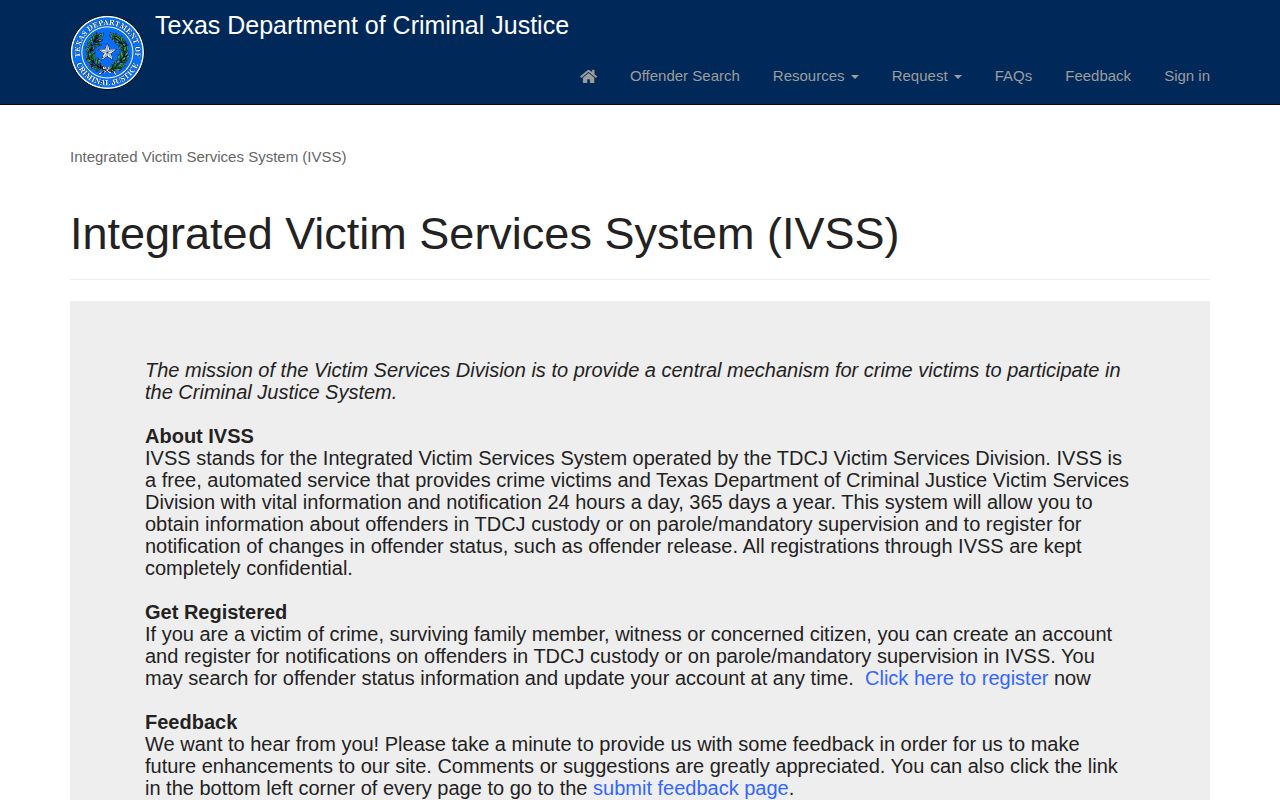
The screen illustrates why a county search alone cannot cover a person later committed to the Texas prison system.
For a TDCJ historical release, the public inmate search is not enough because it includes only people currently incarcerated. Request the release or discharge certificate through TDCJ. If parole is active, use the Post-Release Supervision channels and verify the assigned office.
Uvalde Registry Checks Are Narrow
The Texas DPS Sex Offender Registration Program is a separate public source for people who have a statutory registration duty. It is not a released-inmate list. A current registry entry can corroborate public registration information but cannot establish the Uvalde jail release date, release reason, or freedom from unrelated custody.
Uvalde provides a concrete example of this narrow layer. The City of Uvalde Police Department reported a February 25, 2025 joint compliance operation involving city police, 38th Adult Probation, the Sheriff's Office, the District Attorney, and the U.S. Marshals Sex Offender Investigations Unit. City teams checked 45 registrants and county teams checked 31. Those figures describe a specific compliance operation, not the county's full released population.
Use the current DPS record and the responsible registering authority for confirmation. Do not infer the original booking or release event from a compliance contact.
Verify Uvalde Release Notices
Saved IVSS notices are useful near the time of an event. Pair each notice with the identifier, timestamp, custodian, and exact event label. Then request the record that the originating agency uses to document movement. For the Uvalde jail, that is the booking-out or release/transfer entry. For TDCJ, request the release certificate, actual release date and type, parole or mandatory-supervision status, and later discharge date.
If the county entry says transfer, identify the receiving authority. The Uvalde facility houses local, area, and U.S. federal inmates, so leaving its record can mean an interagency pickup. A federal or immigration transfer is not release to the community. BOP, ICE, USMS, another county, and TDCJ each require a different follow-up.
The Uvalde County released-inmate record path joins the notification clue with sheriff and court records. For a date estimate rather than a completed event, use the Release Date Lookup. An IVSS no-result, an alert, or a roster deletion should never stand alone when a dated official record can be obtained.
Keep the notice message intact when practical. Record the contact channel, arrival time, person identifier, named agency, and event wording. If a notice seems inconsistent with a call or online status, ask whether an update is delayed, a registration followed the person into another system, or a later event replaced the first one. Do not silently choose the source that seems most favorable.
A returned-to-custody alert is a new event, not a correction of the prior release. Likewise, an end-of-supervision event does not prove that every registration or court duty ended. The responsible agency can state what the notice means within its own system, while the court file supplies the legal case outcome.
Note: Registration supports notification; it does not replace direct safety planning or agency confirmation.